The women's health data movement · #MyPeriodCounts

Medicine was made for men. Together, we're changing that.

Women's bodies are still poorly understood: our cycles, our hormones, how medicines work for us. We are bringing women together to build the knowledge that is missing. It starts with something almost every woman has: her period.

Why it matters
Pledge your support.

Open to everyone. Non-binding. Read more

Takes 30 seconds. We won't ask about your health. Leave any time.
Be the first founding member.
Why

Women were left out.

For decades, new medicines were tested mostly on men. Women were then given the same medicines anyway.

1977–1993
For 16 years, US drug guidance kept women who could become pregnant out of early tests of new medicines.
2×
Women get side effects from medicines nearly twice as often as men.
½
Half the dose: in 2013, the US regulator halved the recommended dose of a common sleeping pill for women, because their bodies clear it more slowly.
1.5%
Only 1.5% of mammal species have periods. Lab mice and rats don't, so the usual lab research can't show how periods work.
<1%
Endometriosis, PMS, menopause and three other women’s conditions cause 14% of the women’s health gap, but got less than 1% of the research money for the 64 conditions studied.

The result: women spend a quarter more of their lives in poor health than men.

Why period blood is special

What science already knows makes it worth collecting.

It mostly stays liquid

When you cut your finger, the blood thickens and stops. Period blood mostly stays runny. Much of it has already clotted inside the womb, and the womb lining dissolved those clots again with its own enzymes. Small clots on heavy days are normal.

It comes from a tissue that heals without scars

Period blood comes from the lining of the womb. A deep cut on your knee leaves a scar. The womb lining breaks down and rebuilds itself up to about 400 times in a life, and it normally leaves no scar. No other tissue in the adult body does this as a normal routine.

It carries healing signals

The womb starts repairing itself while the period is still going on. Period fluid contains proteins that help cells move in and close a wound. In early research, it even helped skin wounds heal, in lab dishes and in pigs. These were lab and animal tests. Nobody uses it as a medicine.

It is a window into the womb

Period blood carries living cells from inside the womb, including special immune cells that are different from those in ordinary blood. Getting these cells any other way usually means a doctor taking a small tissue sample (a biopsy), which can be painful. Period blood brings them out every month.

Data

Better medicine starts with data. For periods, there is almost none.

Research can only answer questions it has data for. Periods have barely been measured.

5*
periods in a row, from about 100 healthy women: the longest series of liquid samples we know of.
3
periods per woman in CycleTrack, a large new UK collection of dried samples on pad strips. Big studies follow women briefly; long ones are small.
0*
large collections that follow the same women's periods over a whole year, as far as we know.

* As far as we know, from published studies and trial registers. Details and all sources are on our science page.

Our vision

The world's largest bank of menstrual blood.

Thousands of women. A sample from every period, year after year. Kept safe, controlled by the women who give them, and open to research that helps women.

First
Vienna
The first women, 12 periods in a row.
Then
More cities
Partner labs across Austria, also in smaller cities.
Next
Europe and beyond
One shared bank, many places, the same rules.

Every month, period blood is thrown away. It could help research.

Period blood contains cells from the lining of the womb. Collected over many months, it becomes knowledge that has never existed. Building it is our job, together, for the good of all women.

The movement

No one will close this gap for us. So we do it together.

Around the world, women, scientists and doctors are starting to close the gap. We want to bring them together, and to give every woman a way to take part.

Every woman who takes part, supports or simply spreads the word helps build the data women have been missing.

How it will work

Simple for you. Useful for research.

Step 1
Collect at home
During your period, you collect a small sample at home. We give you everything you need.
Step 2
Drop it off nearby
You bring the sample to a partner pharmacy close to you.
Step 3
Stored safely
A partner lab stores the sample for research, without your name on it.
Step 4
Research learns
With samples from many women over a whole year, researchers can finally see patterns.

We will start with a small group of women. Details follow once the study is approved.

Your say

Your sample. Your say.

The samples are looked after by a non-profit association. The women who take part have a say in what they are used for.

You choose
You decide what your sample may be used for.
Your name stays private
Your name is kept apart from your sample. Researchers never see who you are.
Never for ads
Your data is not used for advertising.
Leave any time
You can stop whenever you want, without giving a reason.

Why I started this

“AI is about to change medicine, but it can only learn from the data that exists. For women, most of that data was never collected. So AI learns from men.

I've spent years in biotech and finance, watching where the money and data go. Women's health gets neither. No one has fixed this because it isn't easy, but it has to be done.

I can't promise a cure for any disease. But a woman who gives samples today and falls ill ten years from now may find that what we stored helps find answers for women like her, and for the generations after her. And every sample makes the world a little better.

What I can promise is how we do it: as a non-profit, with medical researchers, funded by grants, donors and partners. What we learn belongs to everyone. And no woman's data is ever used without her say.

Women have been promised a lot. Let's gift our daughters a world where medicine knows their bodies.”
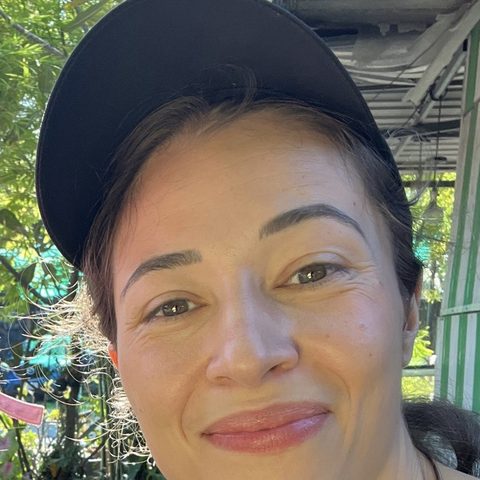
Marine Popoff
Marine Popoff
Founder

Join the movement.

Everyone who joins before the first study starts is a founding member: one of the first to stand behind the movement.

Signing up doesn't commit you to anything.
We won't ask about your health here.
You can leave the list any time, with one click.
Anyone can support the movement.
Be the first founding member.
Founding members

The first founding members will appear here.

Doctor, researcher, pharmacy or supporter? Write to us: hello@period.foundation

Would you like to take part in the study?
Can you also help with your work? Optional. We'll get in touch.

Then spread the word with #MyPeriodCounts.

We'll send you an e-mail to confirm. Only then are you on the list.

Questions

Can I take part already?
You can sign up now. The study itself first needs approval from an ethics committee. We'll write to you when it starts.
What does it mean to be a founding member?
Right now we are gathering supporters: everyone who likes the idea and wants to stand behind it. You don't need to have periods yourself. Partners, fathers, friends, doctors and researchers are just as welcome. Everyone who signs up and confirms their e-mail before the first study starts is a founding member. It is a pledge of support, not a contract: it is non-binding, costs nothing, you get no shares or money, and you don't have to give samples. Taking part in a study comes later and is a separate choice, with its own information and consent.
Do I need to have period problems to help?
No. Anyone can support the movement, with or without periods. When a study starts, it will need women with and without symptoms, and you decide then whether to take part.
Is this a medical test?
No. It is research, not a check-up. You will not get personal test results or a diagnosis.
Does it cost anything?
No. Taking part will be free.
Who is behind this?
Period Foundation is the brand of "Period – Verein zur Förderung der Menstruationsforschung" (in Gründung), a non-profit association being set up in Vienna. It was founded by Marine Popoff, who chairs it.